
EMV, which stands for Europay, Mastercard, and Visa, is a global standard for secure payment transactions. It is a technology that has been widely adopted around the world to reduce fraud in card-present transactions. EMV technology uses a microchip embedded in payment cards to authenticate transactions, making it more secure than traditional magnetic stripe cards.
This article will explore the role of EMV technology in reducing fraud, including its benefits, implementation challenges, impact on different sectors, and its relationship with card-not-present fraud and mobile payments.
Understanding the Need for Fraud Reduction
Fraud has been a persistent problem in the payment industry, with criminals constantly finding new ways to exploit vulnerabilities in the system. Traditional magnetic stripe cards are particularly vulnerable to fraud as the data stored on the stripe can be easily copied and used to create counterfeit cards. This has led to a significant increase in card-present fraud, where criminals use stolen or counterfeit cards to make unauthorized transactions.
The need for fraud reduction is evident when considering the financial impact it has on individuals, businesses, and the economy as a whole. According to the Nilson Report, global card fraud losses reached $27.85 billion in 2018, and this number is expected to rise in the coming years. These losses not only affect financial institutions but also merchants who bear the burden of chargebacks and lost revenue.
How EMV Technology Works
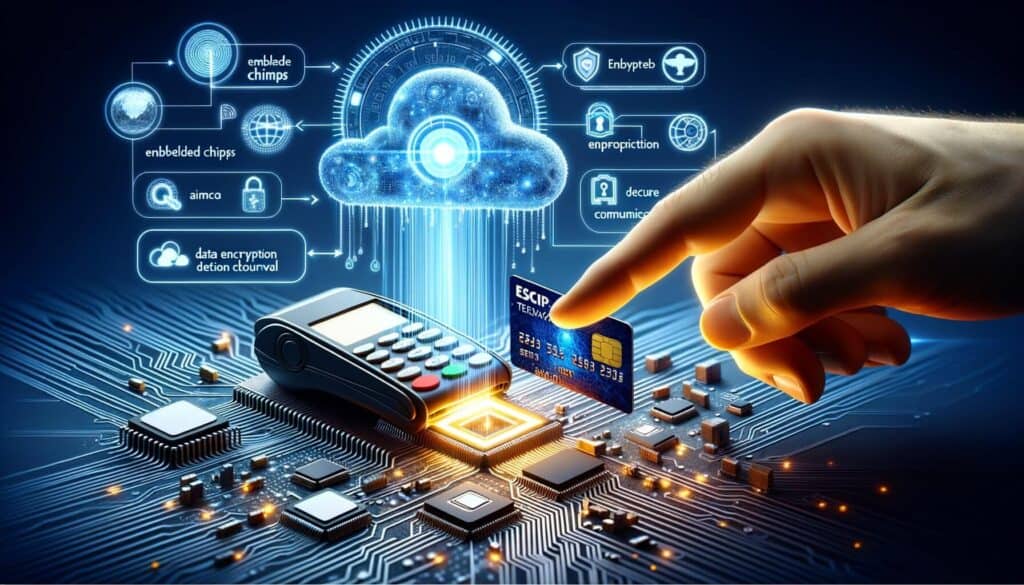
EMV technology works by replacing the magnetic stripe on payment cards with a microchip that stores and processes data securely. When a transaction is initiated, the chip generates a unique code that is used to authenticate the card and verify its legitimacy. This dynamic authentication process makes it extremely difficult for fraudsters to clone or counterfeit EMV cards.
To complete a transaction using EMV technology, the cardholder inserts their card into a point-of-sale (POS) terminal or an automated teller machine (ATM). The chip on the card communicates with the terminal, and both devices exchange encrypted data to verify the card’s authenticity and authorize the transaction. This process, known as chip and PIN or chip and signature, adds an extra layer of security compared to traditional magnetic stripe cards.
Benefits of EMV Technology in Reducing Fraud
The adoption of EMV technology has proven to be highly effective in reducing fraud. Countries that have implemented EMV have seen a significant decline in card-present fraud rates. For example, the United Kingdom experienced a 70% reduction in counterfeit card fraud after implementing EMV technology.
One of the main benefits of EMV technology is its ability to prevent counterfeit card fraud. The unique codes generated by the chip during each transaction cannot be replicated, making it nearly impossible for fraudsters to create counterfeit cards. This has led to a decrease in the use of stolen or cloned cards for fraudulent purposes.
Expected Monetary Value (EMV) technology also provides protection against lost or stolen cards. With traditional magnetic stripe cards, anyone who finds a lost or stolen card can easily use it for unauthorized transactions. However, with EMV cards, the chip’s authentication process ensures that only the legitimate cardholder can use the card. This reduces the risk of fraudulent transactions in cases of card theft or loss.
Another benefit of EMV technology is its ability to combat skimming, a common method used by fraudsters to steal card data. Skimming involves capturing the information stored on the magnetic stripe of a card using a device installed on a compromised POS terminal or ATM. Since EMV cards do not rely on magnetic stripes, skimming attacks become ineffective, as the chip generates unique codes for each transaction.
EMV Implementation Challenges and Solutions
While the benefits of Expected Monetary Value (EMV) technology are clear, its implementation has not been without challenges. One of the main challenges is the cost associated with upgrading payment infrastructure to support EMV transactions. Merchants need to invest in new POS terminals capable of reading EMV cards, and financial institutions need to issue new EMV cards to their customers. This can be a significant financial burden, especially for small businesses.
To address this challenge, many countries have implemented a liability shift policy, which incentivizes merchants to adopt EMV technology. Under this policy, if a fraudulent transaction occurs at a merchant who has not upgraded to EMV, the liability for the fraud falls on the merchant rather than the financial institution. This has encouraged merchants to invest in EMV-compatible terminals to avoid potential losses.
Another challenge is the complexity of the EMV implementation process. Upgrading payment systems and training staff on the new technology can be time-consuming and require significant resources. Additionally, the interoperability of Expected Monetary Value (EMV) technology across different payment networks and countries can be a challenge, as each may have its own specifications and requirements.
To overcome these challenges, industry stakeholders have collaborated to establish common standards and guidelines for EMV implementation. Organizations such as EMVCo, which is owned by American Express, Discover, JCB, Mastercard, UnionPay, and Visa, have developed specifications to ensure interoperability and facilitate the adoption of EMV technology worldwide.
Impact of EMV Technology on Different Sectors
The impact of EMV technology extends beyond reducing fraud in card-present transactions. It has also had a significant impact on different sectors, including financial institutions, merchants, and consumers.
For financial institutions, the adoption of Expected Monetary Value (EMV) technology has resulted in a decrease in fraud losses. By implementing EMV, financial institutions can protect their customers’ funds and reduce the financial impact of fraudulent transactions. This, in turn, helps maintain customer trust and loyalty, as customers feel more secure using payment cards that are protected by EMV technology.
Merchants have also benefited from the adoption of EMV technology. By accepting EMV cards, merchants can reduce their liability for fraudulent transactions and avoid chargebacks. This not only saves them money but also improves their reputation and customer satisfaction. Additionally, EMV technology enables merchants to accept contactless payments, which are becoming increasingly popular among consumers.
Consumers are the ultimate beneficiaries of Expected Monetary Value (EMV) technology. With EMV cards, consumers can feel more confident and secure when making payments. The authentication process provided by EMV technology ensures that their card information is protected and that they are less likely to fall victim to card fraud. This increased security also extends to online transactions, as EMV technology can be used to authenticate cardholders in card-not-present transactions.
EMV Technology and Card-Not-Present Fraud
While EMV technology has been successful in reducing card-present fraud, it has also led to an increase in card-not-present fraud. Card-not-present fraud refers to fraudulent transactions where the cardholder is not physically present, such as online or over-the-phone purchases. As Expected Monetary Value (EMV) technology makes it more difficult to clone or counterfeit cards, fraudsters have shifted their focus to these types of transactions.
To address this issue, additional security measures have been introduced, such as 3D Secure, which is a protocol that adds an extra layer of authentication for online transactions. 3D Secure requires cardholders to enter a password or a one-time code sent to their mobile device to verify their identity. This helps prevent unauthorized use of EMV cards in card-not-present transactions.
EMV Technology and Mobile Payments
The rise of mobile payments has presented new opportunities and challenges for Expected Monetary Value (EMV) technology. Mobile payments, also known as digital wallets, allow consumers to make payments using their smartphones or other mobile devices. These payments can be made by tapping the device on a contactless terminal or by scanning a QR code.
EMV technology plays a crucial role in securing mobile payments. Many mobile payment solutions, such as Apple Pay and Google Pay, use Expected Monetary Value (EMV) technology to generate unique codes for each transaction. This ensures that even if a fraudster gains access to the device or intercepts the transaction data, they cannot use it to make unauthorized payments.
Frequently Asked Questions
Q1. What is EMV technology?
Answer: EMV technology is a global standard for secure payment transactions that uses a microchip embedded in payment cards to authenticate transactions.
Q2. How does EMV technology reduce fraud?
Answer: EMV technology reduces fraud by generating unique codes for each transaction, making it difficult for fraudsters to clone or counterfeit cards.
Q3. What are the benefits of EMV technology?
Answer: The benefits of EMV technology include a reduction in counterfeit card fraud, protection against lost or stolen cards, and prevention of skimming attacks.
Q4. What are the challenges of implementing EMV technology?
Answer: The challenges of implementing EMV technology include the cost of upgrading payment infrastructure, the complexity of the implementation process, and the interoperability of EMV across different networks and countries.
Q5. How does EMV technology impact different sectors?
Answer: EMV technology impacts different sectors by reducing fraud losses for financial institutions, reducing liability for merchants, and providing increased security for consumers.
Q6. What is card-not-present fraud?
Answer: Card-not-present fraud refers to fraudulent transactions where the cardholder is not physically present, such as online or over-the-phone purchases.
Q7. How does EMV technology address card-not-present fraud?
Answer: EMV technology addresses card-not-present fraud by introducing additional security measures, such as 3D Secure, which adds an extra layer of authentication for online transactions.
Q8. How does EMV technology secure mobile payments?
Answer: EMV technology secures mobile payments by generating unique codes for each transaction, ensuring that even if the transaction data is intercepted, it cannot be used to make unauthorized payments.
Conclusion
EMV technology has played a significant role in reducing fraud in card-present transactions. Its adoption has led to a decline in counterfeit card fraud, protection against lost or stolen cards, and prevention of skimming attacks. While the implementation of EMV technology has presented challenges, such as cost and complexity, industry stakeholders have collaborated to establish common standards and guidelines. The impact of EMV technology extends beyond reducing fraud, benefiting financial institutions, merchants, and consumers.
However, as EMV technology has become more prevalent, fraudsters have shifted their focus to card-not-present transactions and mobile payments. Additional security measures, such as 3D Secure, have been introduced to address these challenges. Overall, EMV technology has proven to be an effective tool in reducing fraud and enhancing the security of payment transactions.