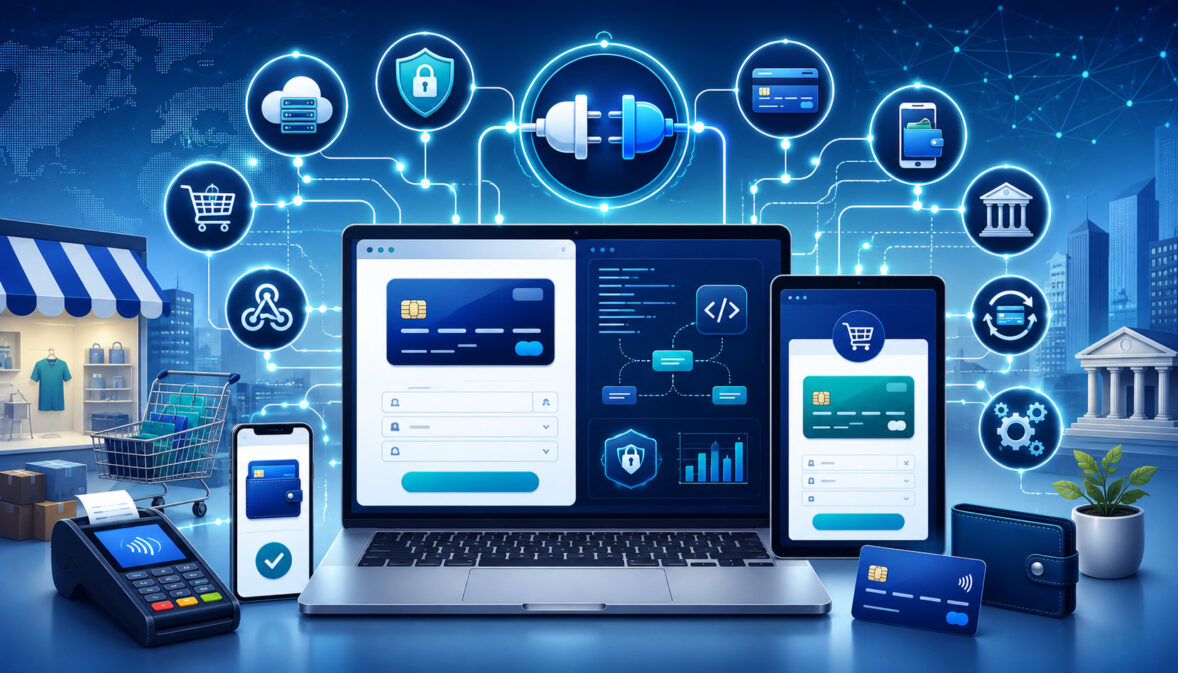
Payment API integration is the process of connecting a website, app, platform, billing system, or business software to payment technology so customers can pay securely and the business can manage transactions with less manual work.
For many businesses, it is the difference between simply accepting payments and building a payment experience that is automated, trackable, scalable, and easier to manage.
A well-planned payment integration can support ecommerce payments, mobile payments, subscription payments, ACH payments, digital wallets, invoices, refunds, chargebacks, payment reporting, and reconciliation.
It can also help finance teams reduce manual entry, developers build more flexible workflows, and business owners offer customers a smoother checkout experience.
This guide explains what a payment API is, how API payment integration works, what businesses should prepare before starting, which features matter most, how to test safely, and what security responsibilities come with accepting digital payments.
It is designed for business owners, ecommerce sellers, SaaS teams, developers, finance teams, startups, and service providers that want a practical understanding of API integration for payments without unnecessary complexity.
What Is Payment API Integration?
Payment API integration means connecting business software to a payment system through an application programming interface. A payment API gives two systems a structured way to communicate.
For example, an ecommerce website can send a payment request to a payment gateway API, receive an approval or decline response, store a transaction ID, and update the order status automatically.
A payment API for businesses may support many functions beyond basic checkout. It can request payment authorization, capture funds, tokenize payment details, save payment methods, process refunds, void unsettled transactions, send recurring billing requests, retrieve settlement reports, and notify business systems through a payment webhook.
In practical terms, a payment API helps a business move payment data through a secure workflow. The customer enters or confirms payment details.
The website, app, hosted payment page, or checkout API sends the required data to the payment gateway or payment processor. The system then routes the transaction for approval, returns a result, and records the payment event.
Payment API integration is common in online stores, service booking platforms, membership websites, SaaS billing systems, mobile apps, marketplaces, invoicing tools, and point-of-sale platforms.
It allows businesses to create payment experiences that match how they sell, whether that means a simple invoice link, embedded payments inside an app, recurring payment API billing for subscriptions, or a custom checkout flow.
For additional background, this guide to payment APIs provides a helpful overview of how payment APIs connect business systems with payment processing tools.
Why Payment APIs Matter for Businesses
Payment APIs matter because they help businesses automate the payment experience instead of relying only on manual invoices, phone payments, emailed card details, or basic checkout tools that do not connect well with other systems.
When payment data flows automatically between checkout, order management, accounting, customer records, and reporting tools, the business can operate with fewer gaps and less repetitive work.
A payment processing API can improve customer experience by making checkout faster and more reliable. Customers may be able to pay by card, ACH payments, digital wallets, mobile payments, saved payment methods, or invoice links.
For subscription payments and recurring billing, a recurring payment API can charge customers on a schedule, handle plan changes, and help manage failed payments.
Payment API integration also supports scalability. A small business may start with one checkout page, but later need multiple locations, service deposits, subscription plans, account-on-file payments, or marketplace payouts. A flexible online payment API can support growth without rebuilding the entire payment process.
For finance teams, payment reporting and reconciliation are major benefits. API-connected systems can pass transaction IDs, authorization codes, settlement dates, refund details, fees, and batch data into accounting or reporting software. That makes it easier to match sales with deposits and identify missing or failed transactions.
Security is another reason businesses use payment APIs. Instead of storing raw card data, many integrations use encryption, tokenization, hosted payment pages, or secure payment SDK tools. These features can reduce exposure to sensitive payment data and help businesses manage PCI compliance responsibilities.
Payment APIs are not just developer tools. They are business infrastructure. The right payment integration affects checkout conversion, cash flow, customer support, fraud prevention, chargebacks, accounting accuracy, and long-term operational flexibility.
How a Payment API Works
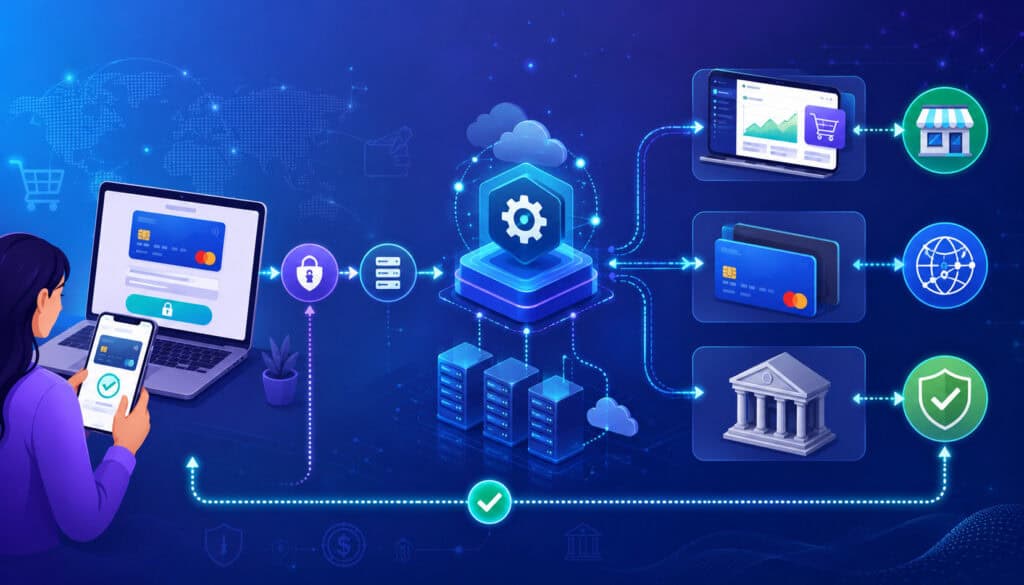
A payment API works by sending structured requests and responses between a business system and payment infrastructure. The process usually starts when a customer begins checkout, pays an invoice, books a service, renews a subscription, or updates a saved payment method.
First, the website or app collects payment details through a hosted payment page, embedded payment form, payment SDK, checkout API, or digital wallet button.
If the integration is designed securely, sensitive card data is either handled by the payment provider’s secure form or immediately exchanged for a token through a tokenization API. The business system stores the token, not the raw card number.
Next, the business system sends a payment authorization API request. This request may include the payment token, transaction amount, currency, customer information, invoice number, billing address, order details, and fraud screening data.
The payment gateway, payment processor, acquiring bank, issuing bank, and card network help determine whether the transaction should be approved or declined.
If the transaction is approved, the business may capture funds immediately or later. Immediate capture is common for ecommerce payments where goods are ready to ship. Delayed capture is common for bookings, rentals, custom orders, or situations where the final amount may change.
After capture, the payment moves toward settlement. A payment settlement API or reporting endpoint may allow the business to retrieve batch details, deposits, fees, refunds, and adjustments. Webhooks may send real-time updates when payments succeed, fail, settle, refund, or become disputed.
Refunds, voids, chargebacks, and reconciliation are also part of the payment lifecycle. A refunds API can return funds to the customer. A void can cancel an unsettled transaction. Dispute tools can help retrieve transaction records and evidence. Reporting APIs help finance teams match payment activity to bank deposits.
Key Participants in Payment API Integration

Payment API integration involves more than a website and a payment form. Several participants work together behind the scenes to authorize, route, settle, report, and protect payments. Understanding these roles helps businesses ask better questions during integration and avoid confusion when something fails.
The customer is the person or organization making the payment. The merchant is the business accepting the payment. The website, app, marketplace, POS system, or business platform is the customer-facing environment where the payment starts. Developers connect this environment to the payment API, configure API keys, build workflows, and test responses.
The payment gateway securely transmits payment information between the business and payment processor. A payment gateway API often handles checkout requests, tokenization, authorization, capture, refunds, and webhook events. The payment processor helps route transactions between the merchant account, acquiring bank, issuing bank, and card network.
The merchant account is the account structure that allows a business to accept card payments and receive deposits. The acquiring bank supports the merchant side of the transaction. The issuing bank supports the customer’s card or account. The card network connects banks and sets many of the rules used to move card payments.
Digital wallet providers may also participate when customers pay through wallet-based methods. Business software platforms, such as accounting, CRM, inventory, subscription billing, or ERP tools, may receive payment data through API integration for payments.
The Business, Customer, and Checkout Experience
The customer only sees the payment experience, not the complex routing behind it. That experience may be a hosted payment page, embedded checkout form, redirect checkout, mobile payment flow, invoice payment link, or fully custom API-based checkout.
The business decides which experience fits its sales model. An ecommerce seller may need a fast cart checkout. A service provider may need deposits, final balances, and invoice links.
A SaaS company may need recurring billing, subscription upgrades, failed payment retries, and saved payment methods. A marketplace may need split payments, seller onboarding, and payout reporting.
The checkout experience affects trust and completion rates. Customers should know what they are paying for, how much they will be charged, which payment methods are accepted, and what happens after payment. Clear confirmation messages, error handling, receipt delivery, and support contact options help reduce confusion.
The Gateway, Processor, Banks, and Networks
The gateway, processor, banks, and networks move the transaction from checkout to authorization and settlement. The payment gateway collects or receives payment details and passes transaction data securely. The payment processor communicates with financial systems that determine whether a transaction can be approved.
For card payments, the acquiring bank represents the merchant side, while the issuing bank represents the customer’s card side. The card network routes authorization messages between them and applies network rules. For ACH payments, the process differs because bank account payments move through bank-to-bank rails instead of card rails.
The gateway and processor may be offered together or separately. Some businesses use a combined setup where the payment gateway, processor, and merchant account are bundled.
Others use a separate gateway connected to a separate processor or merchant account API. Businesses should understand this structure because it affects setup, reporting, support, pricing, and troubleshooting.
For a broader explanation of payment routing, this overview of how payment gateways work can help business and technical teams understand the flow.
Common Payment API Use Cases
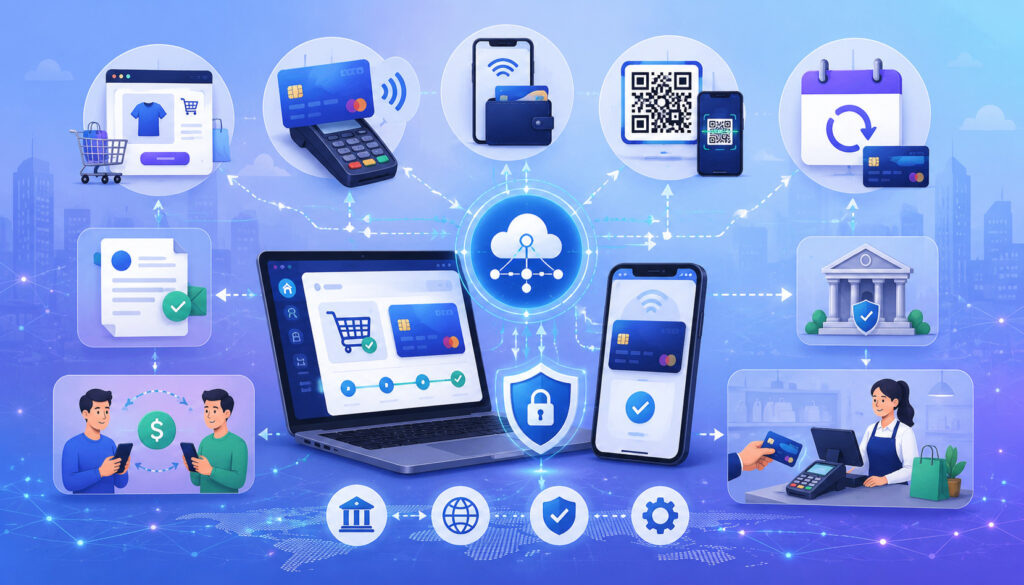
Payment API integration supports many business models. The most familiar use case is ecommerce checkout, where a customer adds items to a cart, enters payment details, receives authorization, and gets an order confirmation. An ecommerce payment API can also support tax calculations, shipping rules, order IDs, refunds, and inventory updates.
Mobile app payments are another common use case. A digital payment API can help apps accept cards, mobile wallets, stored payment methods, booking deposits, in-app invoices, or service charges. Mobile flows must be especially careful about screen size, authentication, failed payments, and customer confirmation.
SaaS companies often use payment APIs for recurring billing and subscription payments. A recurring payment API may support trial periods, upgrades, downgrades, prorations, plan renewals, failed payment retries, and account-on-file billing. Webhooks are especially important here because subscription status may change after a payment succeeds or fails.
Marketplaces and platforms may use payment APIs to accept buyer payments, support seller accounts, track fees, manage payouts, and handle refunds. These integrations are usually more complex because they involve multiple parties and more operational rules.
Other common use cases include invoice payments, donations, booking deposits, membership dues, ACH payments, card-on-file billing, digital wallet checkout, B2B payments, customer portals, and payment links.
Service businesses may use API payment integration to connect scheduling, invoicing, and payment confirmation. Finance teams may use reporting APIs to improve reconciliation and reduce manual tracking.
Payment Gateway API vs Payment Processing API
A payment gateway API and a payment processing API are closely related, but they are not always the same thing. A payment gateway API usually focuses on securely accepting payment data and transmitting transaction requests. It may provide checkout tools, tokenization, payment authorization, capture, refunds, voids, hosted payment page options, and webhook notifications.
A payment processing API is usually closer to the transaction routing and processing function. It may help move payment requests between the merchant, acquiring bank, issuing bank, card network, and settlement systems. Depending on the setup, it may also support reporting, batch details, chargeback information, and merchant account functions.
Some providers combine gateway, processor, and merchant account services into one platform. In that case, the business may only interact with one API even though multiple functions are happening behind the scenes.
Other setups separate these functions. For example, a business may use one payment gateway integration while maintaining a separate merchant account relationship.
A merchant account API may expose onboarding, account status, funding, or settlement data. A card payment API may focus on card authorization, tokenization, and capture. A checkout API may focus on the customer-facing payment session. A refunds API may handle post-payment returns.
Businesses should not choose an API based only on labels. They should review the developer documentation and confirm what the API actually supports.
Important questions include: Can it tokenize cards? Does it support ACH payments? Can it manage recurring billing? Are webhooks available? Can reports be exported? Are chargebacks visible? Does it support the checkout experience the business wants?
Hosted Checkout vs Direct API Integration
Hosted checkout and direct API integration are two common approaches to payment integration. A hosted payment page sends the customer to a secure payment page managed by the payment provider. The business may customize some branding, but the sensitive payment form is hosted outside the merchant’s own environment.
Hosted checkout is often easier to launch and may reduce PCI scope because the business does not directly handle raw card data. It can be a good fit for smaller teams, invoice payments, simple ecommerce, donation pages, and businesses that want a reliable payment experience without building every detail from scratch.
Direct API integration gives the business more control. The payment form may be embedded directly into the website or app, or the business may build a custom checkout flow using a payment SDK and tokenization API. This can create a smoother branded experience, support more complex workflows, and allow deeper integration with internal systems.
The tradeoff is responsibility. More control usually means more development, more testing, more security review, and more maintenance. Businesses must protect API keys, verify webhooks, handle errors correctly, prevent duplicate transactions, maintain secure code, and understand PCI compliance responsibilities.
Redirect checkout sits between these options. The customer begins on the business site, is redirected to a secure page to pay, and then returns after payment. Embedded payments may use secure fields or payment SDK components so customers stay on the business page while sensitive data is handled by the payment provider.
Payment API Integration Options Table
Different payment integration models fit different business needs. The right choice depends on customer experience, technical resources, PCI scope, payment methods, reporting needs, and how much customization the business requires.
| Integration Type | How It Works | Best For | Important Considerations |
| Hosted payment page | Customer pays on a secure page hosted by the payment provider | Invoices, simple ecommerce, service payments, donations | Less development effort, but less control over checkout design |
| Redirect checkout | Customer starts checkout on the business site, pays on a secure external page, then returns | Businesses that want easier setup with clear payment confirmation | Redirects must be tested carefully on mobile and across browsers |
| Embedded checkout | Secure payment fields or SDK components appear inside the business website or app | Ecommerce, SaaS, booking platforms, customer portals | Better user experience, but more development and testing |
| Fully custom API integration | Business builds a custom payment flow using API endpoints and tokenization | Platforms, marketplaces, complex billing, custom apps | Greater control, higher security and maintenance responsibility |
| Invoice or payment link API | System generates links customers can use to pay | Service providers, B2B billing, deposits, remote payments | Useful for accounts receivable, but must connect cleanly to reconciliation |
| Recurring billing API | API charges customers on a schedule using saved payment tokens | SaaS, memberships, subscriptions, retainers | Requires retry logic, customer notifications, and payment method updates |
This table can help teams narrow the decision before reviewing technical documentation. A business does not always need the most advanced option. It needs the option that supports the desired payment experience reliably and securely.
What Businesses Need Before Starting Integration
Before starting payment API integration, a business should prepare both operational and technical requirements. The first requirement is a payment setup that can support the intended payment methods.
That may include a merchant account, payment gateway, payment processor, or payment provider account. Some businesses also need underwriting, business verification, banking details, ownership information, refund policies, and industry-specific review.
The business should define what it sells and how payments work. This includes product catalog structure, service pricing, tax rules, shipping rules, deposits, tips, discounts, recurring billing rules, refund terms, cancellation rules, and payment confirmation steps. Developers cannot build a reliable integration if the business rules are unclear.
Technical preparation matters as well. The website or app should be stable, secure, and ready to support HTTPS. The team should know which systems need payment data, such as ecommerce platforms, CRM tools, accounting software, inventory systems, subscription platforms, or customer portals.
Developer resources are important for API payment integration. The team should review developer documentation, API authentication, API keys, supported SDKs, sandbox testing tools, webhook instructions, error codes, rate limits, and reporting endpoints. If internal developers are not available, the business may need an experienced integration partner.
Security and compliance planning should happen before development, not after launch. Businesses should understand PCI compliance responsibilities, fraud prevention options, user access controls, logging policies, and how sensitive data will be handled.
For related payment setup considerations, this article on choosing a payment processor can help businesses evaluate operational factors before integration begins.
Important Payment API Features to Look For
A useful payment API should support the payment functions the business needs now and may reasonably need later.
Core features often include authorization, capture, voids, refunds, tokenization, saved payment methods, recurring billing, ACH payments, digital wallet support, webhook notifications, reporting, reconciliation tools, fraud screening, and chargeback management.
Payment authorization API features allow a business to confirm whether funds are available before completing a transaction. Capture features allow the business to finalize the approved payment. Voids help cancel transactions before settlement, while a refunds API returns money after settlement.
Tokenization is one of the most important payment security features. A tokenization API replaces sensitive payment details with a payment token that can be used for future transactions. This supports account-on-file payments, subscription payments, repeat purchases, and customer portals.
Webhooks are also essential. A payment webhook can notify business systems when payments succeed, fail, refund, settle, or become disputed. Without webhooks, businesses may rely too heavily on the immediate checkout response and miss later events.
Reporting and reconciliation features are especially valuable for finance teams. A strong payment reporting API should provide transaction IDs, batch data, deposit details, fee information, refunds, chargebacks, and settlement timing.
Developer documentation should be clear and complete. Good documentation explains authentication, request formats, response fields, error codes, sandbox testing, webhook security, SDK usage, and launch procedures.
Tokenization and Saved Payment Methods
Tokenization replaces sensitive payment data with a secure reference value. Instead of storing a card number, the business stores a token that represents the payment method. That token can be used for approved future transactions, depending on customer consent, business rules, and payment provider capabilities.
This matters for subscriptions, recurring billing, memberships, repeat ecommerce purchases, invoice payments, and account-on-file billing. A customer can update or reuse a saved payment method without the business storing raw card data. This reduces exposure and can simplify the payment experience.
Tokenization does not remove every security responsibility, but it can help reduce risk. Businesses still need secure access controls, protected API keys, careful logging, webhook verification, and appropriate PCI compliance processes.
A tokenization API should be reviewed carefully. Businesses should understand whether tokens are reusable, customer-specific, merchant-specific, network-supported, or limited to a particular payment environment. They should also know how expired cards, updated cards, deleted payment methods, and failed tokens are handled.
For more background, this payment data tokenization overview explains how tokenization supports safer payment storage practices.
Webhooks and Real-Time Payment Updates
A payment webhook is an automated message sent from the payment system to a business system when an event occurs. Webhooks are important because not every payment event happens during checkout.
A payment may be approved immediately, but settlement, refund completion, chargeback updates, subscription renewal results, and failed retry events may happen later.
Common webhook events include successful payments, failed payments, refunds, voids, chargebacks, subscription renewals, expired cards, settlement updates, payout reports, and ACH return notices. For SaaS companies, webhooks may determine whether an account remains active after a recurring payment succeeds or fails.
Webhook security is critical. Businesses should verify webhook signatures, confirm event IDs, avoid trusting unverified payloads, and build idempotent processing so the same event does not create duplicate orders or credits. If a webhook fails, the system should retry or allow manual review.
Payment API Integration Step by Step
A successful payment API integration starts with a defined payment use case. The business should decide whether it needs ecommerce checkout, invoice payments, recurring billing, mobile payments, ACH payments, digital wallets, deposits, account-on-file billing, or a custom platform workflow.
Next, choose the payment flow. A hosted payment page may be best for a simple setup. Embedded payments may fit ecommerce or SaaS. Fully custom API integration may be appropriate for platforms with complex checkout, split payments, or advanced reporting.
The development team should review the API documentation carefully. This includes authentication, API keys, endpoint structure, request fields, response codes, tokenization, payment authorization, capture, refunds, webhooks, sandbox testing, error handling, and go-live steps.
After that, create sandbox credentials and build the checkout or payment form. Sensitive data should be tokenized using secure fields, a payment SDK, or a tokenization API. The business system should submit authorization requests and handle approvals, declines, timeouts, and validation errors.
Webhooks should be configured early so developers can test event handling. The team should test successful payments, failed payments, duplicate submissions, expired cards, refunds, voids, chargebacks, subscription renewals, and settlement reports.
Before launch, review security and compliance controls. API keys should be protected, HTTPS should be enforced, logs should not contain sensitive payment data, and access should be limited. After launch, monitor payment success rates, decline patterns, refund activity, webhook failures, and reconciliation reports.
Sandbox Testing and Quality Assurance
Sandbox testing allows a business to test payment API integration without moving real money. It is one of the most important steps before launch because payment failures affect customers, revenue, support teams, and accounting.
Developers should use sandbox testing to confirm that successful payments create the right order status, failed payments do not create paid orders, declined cards show useful messages, and duplicate submissions are prevented. Test cards can simulate approvals, declines, expired cards, incorrect CVV values, insufficient funds, and other scenarios.
Refund testing is also important. The team should confirm that refunds update the order record, customer communication, reporting system, and accounting workflow. Void testing should verify what happens when a transaction is canceled before settlement.
Webhook testing should include successful delivery, failed delivery, retries, duplicate webhook events, out-of-order events, and signature verification. Businesses should also test what happens if the payment API times out after the customer clicks the pay button. The system should avoid charging twice or leaving the order in an unclear state.
Quality assurance should include mobile devices, browsers, slow connections, form validation, accessibility, receipt delivery, and customer support visibility. Reconciliation testing should confirm that transaction reports, settlement reports, refunds, fees, and chargebacks can be matched correctly.
Security and PCI Compliance for Payment APIs
Payment security should be built into the integration from the start. PCI compliance applies to businesses and systems that store, process, or transmit cardholder data.
The exact scope depends on how the payment flow is built, which systems touch sensitive data, and which controls are in place. Businesses should consult qualified professionals for formal compliance guidance.
The official payment security standards resource explains that payment data security standards include operational and technical requirements for organizations that accept or process payment transactions.
Practical security controls include HTTPS, encryption, tokenization, secure payment forms, restricted access, protected API keys, secure server configuration, strong authentication, logging controls, and regular vulnerability review. Businesses should avoid storing raw card data unless they have the proper environment, controls, and compliance expertise.
API keys should never be exposed in client-side code, public repositories, browser logs, or support screenshots. Separate sandbox and production keys should be used. Credentials should be rotated when needed and access should be limited to authorized personnel.
Webhook verification is another important control. A business should confirm that webhook events actually came from the payment system before updating orders, granting access, issuing credits, or changing subscription status.
Developers should also consider API security risks such as broken authorization, weak authentication, excessive data exposure, and poor rate limiting. This API security risk list is a useful reference for teams building or maintaining payment-related APIs.
Common Payment API Security Mistakes
Many payment API security problems come from shortcuts during development or launch. One common mistake is exposing API keys. Secret keys should not appear in front-end code, public repositories, mobile app packages, analytics tools, or shared documents. Once exposed, they may allow unauthorized payment actions or data access.
Another serious mistake is storing raw card data without proper controls. Businesses should use hosted payment pages, secure fields, payment SDKs, and tokenization whenever possible. Tokenization helps reduce the amount of sensitive data the business environment handles.
Skipping HTTPS is also risky. Payment pages, customer portals, API calls, webhook endpoints, and admin tools should use secure connections. Businesses should also avoid logging card numbers, security codes, full bank details, or sensitive authentication data.
Webhook mistakes are common. If the system does not verify webhook signatures, an attacker could try to send fake payment events. If the system does not handle duplicate webhooks, a customer could receive duplicate credits or an order could be processed twice.
Weak access controls create operational risk. Not every employee needs access to API keys, refund tools, settlement reports, or customer payment tokens. Role-based access helps limit mistakes and misuse.
Poor error handling can also create security and customer experience problems. Error messages should help customers correct issues without exposing sensitive system details. Developers should log enough information for troubleshooting without storing restricted payment data.
Payment API Integration Costs
Payment API integration costs vary by business model, payment methods, transaction volume, development complexity, and provider setup. Businesses should review the full cost of payment integration, not just the per-transaction rate.
Common costs include transaction fees, gateway fees, monthly fees, setup fees, platform fees, ACH fees, digital wallet costs, chargeback fees, fraud tool costs, recurring billing fees, reporting fees, and developer costs. Some businesses also need custom development, third-party plugins, accounting integration, subscription management tools, or ongoing technical support.
Developer costs can be significant when the payment flow is custom. A hosted payment page may require less development, while a fully custom payment processing API integration may require planning, coding, QA testing, security review, launch monitoring, and maintenance.
Chargebacks and disputes can create direct and indirect costs. A dispute may involve fees, lost revenue, staff time, evidence preparation, and customer communication. Fraud prevention tools can reduce risk, but they may also add costs or create false declines if configured poorly.
PCI-related costs depend on the integration and business environment. Hosted checkout and tokenization may reduce scope, while direct handling of card data can increase compliance complexity.
Maintenance should not be ignored. APIs change, certificates expire, payment methods evolve, fraud patterns shift, and business rules change. A reliable payment integration needs ongoing monitoring and periodic review.
Payment API Pricing and Cost Table
The following table summarizes cost areas businesses should review when planning payment API integration.
| Cost Area | What It Means | When It May Apply | What Businesses Should Review |
| Transaction fees | Fees charged per approved or processed payment | Card payments, ACH payments, digital wallets | Rate structure, card type impact, minimum fees |
| Gateway fees | Fees for using a payment gateway | Gateway-based checkout or API routing | Monthly charges, per-transaction charges, feature limits |
| Developer costs | Cost to build and maintain the integration | Custom checkout, embedded payments, platform workflows | Initial build, QA, security review, ongoing support |
| Recurring billing fees | Costs for subscription or automated billing tools | SaaS, memberships, retainers | Plan management, retry tools, dunning support |
| Fraud prevention costs | Fees for screening, rules, verification, or risk tools | Ecommerce, high-ticket sales, card-not-present payments | Fraud filters, false decline rates, review workflows |
| Chargeback fees | Fees and losses related to disputes | Any card-accepting business | Alerts, evidence tools, dispute reporting |
| ACH fees | Costs for bank account payments | B2B payments, invoices, recurring billing | Return fees, settlement timing, verification |
| PCI-related costs | Costs tied to security and compliance obligations | Card payment acceptance | Scope, validation steps, scanning, professional guidance |
| Reporting and reconciliation costs | Tools or labor needed to match payments and deposits | Multi-channel sales, finance workflows | Settlement data, fee reporting, accounting exports |
Card Payments, ACH, and Digital Wallet API Integration
A payment API may support several payment methods, and each method has different customer experience, cost, risk, and settlement considerations.
Card payments are widely used for ecommerce payments, mobile payments, subscriptions, service deposits, and card-on-file billing. A card payment API typically supports authorization, capture, tokenization, refunds, voids, and chargeback records.
ACH payments can be useful for invoices, B2B payments, recurring billing, large transactions, and situations where processing costs matter. ACH payments may have different settlement timing and return rules than card payments. Businesses should plan for bank account verification, failed transfers, returns, and customer authorization.
Digital wallets can speed up checkout by allowing customers to use stored payment credentials through a wallet experience. A digital payment API may support wallet payments on websites, mobile apps, and in-app checkout flows. Wallets can reduce friction, especially on mobile devices.
Account-on-file payments allow customers to save payment methods for future use. This is useful for repeat purchases, memberships, subscriptions, and customer portals. Tokenization is essential for this type of workflow.
The best payment method mix depends on customer preferences, transaction size, risk, cost, and cash flow needs. A business selling low-ticket ecommerce items may prioritize card and wallet checkout.
A B2B service provider may prioritize ACH payments, invoice links, and reconciliation. A SaaS company may need cards, ACH, recurring billing, failed payment retries, and subscription reporting.
Handling Failed Payments and Declines
Failed payments are a normal part of payment processing. A strong payment API integration should handle them clearly and consistently. Common reasons include insufficient funds, expired cards, incorrect card data, invalid billing details, issuer declines, fraud filters, network timeouts, expired tokens, duplicate transaction attempts, or closed bank accounts.
The customer message should be helpful without revealing sensitive details. For example, the system can ask the customer to check payment details or use another payment method. It should not expose internal processor codes or security logic.
Recurring billing requires special attention. Failed subscription payments should trigger retry logic, customer notifications, payment method update links, and account status rules. Businesses should decide how many retries are appropriate, how often to retry, and when to pause service or contact the customer.
Developers should separate hard declines from temporary failures. Some declines should not be retried because the issuing bank has rejected the transaction. Other failures, such as timeouts or temporary network issues, may require a safe retry process.
Duplicate payment prevention is critical. If a customer clicks the pay button twice or refreshes the page during a timeout, the system should not create duplicate charges. Idempotency keys, transaction status checks, and careful webhook handling can help.
Finance and support teams should have visibility into failed payment reasons, retry attempts, customer notices, and final outcomes.
Refunds, Voids, Chargebacks, and Disputes
Payment API integration should support post-payment events, not just successful checkout. Customers may cancel orders, return products, dispute charges, request partial refunds, or need payment corrections. A reliable integration helps staff manage these events accurately.
A void usually cancels an authorized transaction before settlement. This can be useful when an order is canceled quickly or an authorization was created by mistake. A refund returns money after the transaction has settled. Refund APIs may support full refunds, partial refunds, and refund status tracking.
Chargebacks and disputes are different from refunds. A chargeback begins when a customer disputes a transaction through their card issuer. The business may need to provide evidence such as receipts, order details, delivery confirmation, customer communication, refund policy, login records, or service usage information.
Payment APIs and reporting tools can help collect transaction records, authorization data, customer details, and timestamps. However, dispute response also requires operational discipline. Businesses should have clear refund policies, accurate descriptors, responsive support, and organized records.
Chargeback prevention starts before a dispute occurs. Clear product descriptions, transparent pricing, recognizable billing descriptors, delivery confirmation, fraud screening, and customer service can reduce confusion and disputes.
The payment integration should update business systems when refunds, voids, and chargebacks happen. Otherwise, customer accounts, inventory, accounting records, and revenue reports may become inaccurate.
Reporting, Reconciliation, and Accounting Integration
Payment reporting and reconciliation are often overlooked during development, but they are essential for finance teams. A payment may look successful at checkout, but the finance team still needs to match that transaction to deposits, fees, refunds, chargebacks, and settlement batches.
A payment reporting API can provide transaction IDs, authorization codes, capture dates, settlement dates, batch numbers, gross amounts, processing fees, net deposits, refund details, dispute adjustments, and customer references. Clean data makes reconciliation easier and reduces manual research.
Accounting integration can connect payment activity to invoices, orders, customer accounts, and bank deposits. This is especially important for businesses with multiple sales channels, recurring billing, deposits, partial payments, or high transaction volume.
Reconciliation problems often happen when order IDs do not match payment IDs, refunds are processed outside the main system, fees are not visible, or deposits combine many transactions without clear batch data. Businesses should define required reporting fields before launch.
Finance teams should be included early in the payment integration planning process. Developers may focus on checkout success, while finance teams need settlement accuracy, fee visibility, refund tracking, and audit trails.
Common Payment API Integration Problems
Payment API integration problems usually fall into two categories: technical issues and business process issues. Both can disrupt payments, frustrate customers, and create support work.
Technical problems include failed authentication, invalid API keys, incorrect endpoint URLs, malformed requests, missing required fields, timeout handling issues, duplicate payments, webhook failures, and confusing error messages. These issues are often discovered during sandbox testing, but some appear only under real traffic.
Business process problems include unclear refund rules, poor customer communication, weak fraud settings, incomplete reporting, missing reconciliation workflows, and staff confusion about payment statuses. These issues may not be obvious during development because the API works correctly, but the operational process around it is incomplete.
Checkout errors can also harm customer trust. If a payment fails and the customer does not understand why, they may abandon the purchase or contact support. If a payment succeeds but the order status does not update, the customer may pay again or dispute the charge.
Settlement reporting gaps can cause finance teams to spend unnecessary time matching deposits. Refund delays can create customer frustration. Mobile checkout issues can reduce conversion. Webhook failures can cause subscription access problems.
The best way to reduce these problems is to test the full payment lifecycle, document workflows, train staff, and monitor the integration after launch.
Technical Integration Problems
Technical integration problems often start with authentication. API keys may be missing, expired, copied incorrectly, placed in the wrong environment, or exposed in unsafe places. Sandbox keys and production keys should be clearly separated.
Request formatting issues are also common. A payment API may require amounts in cents, specific currency formatting, required customer fields, unique order IDs, or specific headers. Small formatting mistakes can cause repeated declines or failed requests.
Timeout handling must be designed carefully. If the API does not respond quickly, the system should check transaction status before retrying. Otherwise, duplicate payments can occur. Idempotency controls help prevent repeated charges when the same payment request is submitted more than once.
Webhook signature verification can also cause issues. If verification is configured incorrectly, valid webhooks may be rejected. If verification is skipped, fake or altered events may be accepted.
Endpoint changes, SDK updates, unsupported versions, rate limits, and insufficient testing can create future maintenance problems. Developers should monitor API status updates and keep integration documentation current.
Business and Operational Problems
Business and operational problems happen when the payment technology works, but the surrounding process is unclear. For example, a business may accept deposits but not define when the final balance is charged. A refund policy may exist on the website but not match how staff process refunds in the system.
Poor customer communication can lead to avoidable disputes. Customers should receive confirmation, receipts, payment failure notices, refund updates, and subscription renewal information when appropriate. Billing descriptors should be recognizable so customers understand the charge.
Weak fraud settings can create losses, while overly strict fraud rules can block good customers. Businesses should review fraud filters, manual review workflows, address verification settings, velocity checks, and chargeback patterns.
Reconciliation gaps can create accounting confusion. If refunds, chargebacks, fees, and deposits are not connected to the original transaction, finance teams may struggle to close books accurately.
Training matters. Customer service teams should know how to look up payment status, explain declines, issue refunds when authorized, and escalate disputes. A payment integration is only reliable when people and systems work together.
Best Practices for Payment API Integration
The best payment API integrations are secure, tested, documented, and monitored. Start by choosing the payment flow that fits the business model. Avoid unnecessary complexity, but do not choose a basic checkout if the business needs subscriptions, ACH payments, account-on-file billing, or advanced reporting.
Use tokenization whenever possible. Do not store raw card data unless the business has the proper compliance environment and professional guidance. Protect API keys, separate environments, limit access, and rotate credentials when needed.
Verify webhooks before acting on them. Build idempotent processing so duplicate events do not create duplicate orders, refunds, or credits. Log important payment events, but never log sensitive card details or security codes.
Test edge cases thoroughly. Successful payments are only one part of the payment lifecycle. Test declines, refunds, voids, timeouts, duplicate submissions, expired cards, ACH returns, webhook retries, subscription failures, and chargebacks.
Document payment workflows for developers, finance teams, and customer support. The documentation should explain payment statuses, refund rules, retry logic, reconciliation steps, webhook events, and escalation procedures.
Monitor performance after launch. Track approval rates, decline reasons, payment errors, failed webhooks, refund volume, chargebacks, and settlement discrepancies. Review reports regularly and improve the integration as the business grows.
Maintain PCI compliance responsibilities and consult qualified professionals when needed. Payment security is an ongoing process, not a one-time launch task.
How to Choose the Right Payment API for Your Business
Choosing the right payment API requires both business and technical evaluation. Start with payment methods. Confirm support for card payments, ACH payments, digital wallets, mobile payments, recurring billing, invoices, and any other payment types your customers expect.
Review developer documentation closely. Good documentation should explain API keys, authentication, sandbox testing, tokenization, authorization, capture, refunds, webhooks, error codes, SDKs, reporting, and launch steps. Poor documentation can slow development and increase integration risk.
Evaluate security features. Look for encryption, tokenization, secure hosted checkout options, webhook verification, role-based access, fraud prevention tools, and PCI compliance support. Also consider how the API helps reduce sensitive data exposure.
Reporting and reconciliation should be part of the decision. Confirm whether the API provides settlement details, transaction exports, fee visibility, refund tracking, chargeback records, and accounting system compatibility.
Pricing should be transparent enough to estimate total cost. Review transaction fees, gateway fees, ACH fees, chargeback fees, monthly fees, recurring billing fees, fraud tool costs, and support costs. Avoid focusing only on the lowest advertised rate.
Support quality matters when payments are business-critical. Consider available support channels, response expectations, documentation quality, status monitoring, and escalation options.
Scalability is also important. The payment API should support expected transaction volume, additional payment methods, new sales channels, and future business models without forcing a complete rebuild.
Payment API Integration Checklist
Use this checklist before launch to confirm that the business, technical, security, and finance requirements are ready.
- Business payment needs are clearly defined.
- Payment methods are selected.
- Merchant account or provider setup is complete.
- Business verification requirements are addressed.
- Checkout flow is chosen.
- API documentation has been reviewed.
- Sandbox testing is complete.
- API keys are protected.
- HTTPS is enforced.
- Tokenization is configured.
- Webhooks are configured and verified.
- Successful payments are tested.
- Declines and failed payments are tested.
- Refunds and voids are tested.
- Duplicate transaction prevention is tested.
- Timeout handling is tested.
- Recurring billing workflows are tested, if applicable.
- ACH returns are reviewed, if applicable.
- Fraud prevention settings are configured.
- Chargeback workflow is documented.
- Reporting and reconciliation are reviewed.
- Accounting exports or integrations are tested.
- Customer receipts and notifications are tested.
- Staff are trained.
- PCI compliance responsibilities are understood.
- Launch monitoring plan is prepared.
This checklist should be revisited whenever the business adds a new payment method, changes checkout flow, launches subscriptions, expands into new sales channels, or updates accounting workflows.
What is payment API integration?
Payment API integration is the process of connecting a business website, app, platform, billing system, or internal software to payment technology through an API. It allows the business to send payment requests, receive authorization responses, capture funds, process refunds, manage recurring billing, and retrieve reports automatically.
A good integration supports both customer experience and back-office operations. It can update orders, send receipts, store payment tokens, notify accounting systems, and help finance teams reconcile transactions.
What is a payment API for businesses?
A payment API for businesses is a software interface that allows business systems to communicate with payment gateways, processors, or related payment services. It can support card payments, ACH payments, digital wallets, recurring billing, checkout sessions, invoices, tokenization, refunds, reporting, and webhooks.
Businesses use payment APIs to automate payments, reduce manual work, improve checkout flexibility, and connect payment activity with other systems such as ecommerce platforms, CRMs, accounting tools, and subscription billing software.
How does a payment gateway API work?
A payment gateway API securely sends payment information from a website, app, or business platform to the payment gateway. The gateway then helps route the transaction for authorization and returns an approval, decline, or error response.
The API may also support tokenization, capture, voids, refunds, hosted payment pages, digital wallets, fraud screening, and payment webhook notifications. In many integrations, the gateway API is the main connection between the checkout experience and the payment processing system.
Is a payment API the same as a payment gateway?
No. A payment API is the technical interface used to communicate with payment systems. A payment gateway is a service that securely transmits transaction data and helps route payment requests.
Some payment gateways provide APIs, so the terms are often used together. However, the API is the connection method, while the gateway is part of the payment infrastructure. A payment processor, merchant account, acquiring bank, issuing bank, and card network may also be involved.
Do I need a developer for payment API integration?
Many businesses need a developer for payment API integration, especially when building embedded checkout, custom checkout, mobile payments, recurring billing, or accounting connections. A hosted payment page may require less technical work, but setup and testing are still important.
A developer can review API documentation, configure API keys, build checkout logic, handle errors, verify webhooks, test transactions, and protect sensitive data. Businesses without internal developers may work with an experienced implementation partner.
What is sandbox testing in payment API integration?
Sandbox testing is the process of testing a payment integration in a non-live environment. It allows developers to simulate successful payments, declined transactions, expired cards, invalid security codes, refunds, webhooks, and other scenarios without moving real money.
Sandbox testing helps identify errors before customers experience them. It should include checkout testing, mobile testing, browser testing, webhook testing, refund testing, duplicate payment prevention, timeout handling, and reconciliation testing.
How do payment APIs support recurring billing?
Payment APIs support recurring billing by saving approved payment methods as secure tokens and charging those tokens on a schedule. This is common for SaaS platforms, memberships, subscriptions, service retainers, and installment plans.
A recurring payment API may also support plan changes, renewal notices, failed payment retries, customer payment method updates, cancellation handling, and subscription status changes. Webhooks are important because they notify business systems when recurring payments succeed or fail.
What are payment webhooks?
Payment webhooks are automated event messages sent by a payment system to a business system. They notify the business when important payment events happen, such as successful payments, failed payments, refunds, voids, chargebacks, subscription renewals, ACH returns, or settlement updates.
Webhooks help keep business systems accurate after checkout. They should be verified securely, logged carefully, and processed in a way that prevents duplicate updates.
Is payment API integration secure?
Payment API integration can be secure when it is designed and maintained properly. Important controls include HTTPS, encryption, tokenization, secure payment forms, protected API keys, webhook verification, access controls, safe logging, fraud prevention, and ongoing monitoring.
Security depends on implementation. Businesses should avoid storing raw card data, exposing API keys, skipping webhook verification, or ignoring PCI compliance responsibilities. Qualified security or compliance professionals should be consulted when needed.
Final Thoughts
Payment API integration helps businesses connect customer-facing payment experiences with payment gateways, processors, merchant accounts, banks, networks, reporting tools, and business systems. Done well, it supports secure checkout, faster payment workflows, recurring billing, refunds, reconciliation, fraud prevention, and better visibility into payment activity.
The most successful integrations are planned before they are built. Businesses should define payment use cases, choose the right checkout flow, understand security responsibilities, review developer documentation, test in a sandbox, configure webhooks, and involve finance and support teams early.
A payment API is not just a technical connection. It affects customer trust, cash flow, accounting accuracy, support workload, and long-term scalability.
Whether the business uses a hosted payment page, embedded payments, mobile checkout, recurring payment API, or a fully custom payment processor API, the goal should be the same: a reliable, secure, and easy-to-manage payment experience.
Plan carefully, test thoroughly, protect sensitive data, monitor performance, and choose a payment setup that fits the business model rather than forcing the business to fit the technology.